You Are Not a Draft: The Radical Beauty of Changing Who You Are
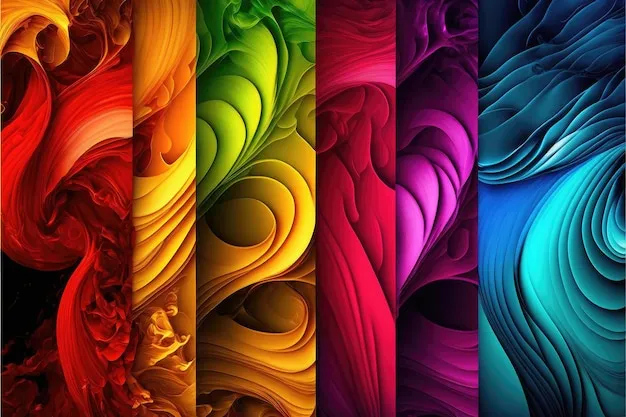
Photo: colorful paint swatches blending identity abstract art, via img.freepik.com
There's a moment most of us have experienced — someone digs up an old tweet, a yearbook quote, a half-remembered opinion you held in your twenties — and suddenly you're on trial for who you used to be. The internet loves a contradiction. But here's what the internet often gets wrong: contradicting your past self isn't a crime. It might actually be the most human thing you can do.
Identity, it turns out, operates a lot like a color palette. Not a single fixed hue, but something that responds to light, context, and whatever surface it's resting on. The chameleon doesn't change color because it's confused. It changes because it's alive.
The Psychology of the Shifting Self
Researchers in personality psychology have long grappled with a tension between two ideas: that we have a stable core self, and that we are perpetually in flux. The good news is both things are true at once.
Dr. Dan McAdams, a personality psychologist at Northwestern University, has spent decades studying what he calls the "narrative self" — the story we construct about who we are. His work suggests that identity isn't something you have, it's something you do. We author ourselves continuously, revising the story as new chapters demand it.
What's striking is that most people, when given space to reflect, don't experience personal change as loss. They experience it as clarification. Like they were always moving toward something, and the earlier version of themselves just hadn't arrived yet.
This tracks with research on what psychologists call "belief updating" — the process by which new information causes us to revise our worldview. Far from being a sign of weakness, the ability to update your beliefs is actually associated with higher cognitive flexibility and better decision-making. Stubbornness, on the other hand, tends to correlate with fragility. The person who can never be wrong is usually the most brittle person in the room.
When Public Figures Let Themselves Evolve
Nothing makes identity change more visible — or more scrutinized — than doing it in public. And yet some of the most compelling personal narratives in American culture are stories of people who had the guts to contradict themselves loudly.
Take Dolly Parton, who spent decades carefully managing a particular image — country sweetheart, apolitical entertainer — before gradually, and then more openly, stepping into advocacy and social commentary. She didn't announce a rebrand. She just grew, and let people watch. Fans who'd followed her for thirty years found themselves loving her for entirely new reasons.
Or consider author Glennon Doyle, whose memoir Untamed became a cultural touchstone precisely because it documented a fundamental identity shift in real time — a change in her marriage, her faith, her sense of self. The book sold millions of copies not because it was a neat resolution, but because it was honest about the mess of becoming.
What these stories share isn't a dramatic reveal. It's permission. They give readers and listeners permission to say: I thought one thing, and now I think something else, and that's okay.
The Philosophy of Productive Contradiction
Philosophers have wrestled with identity for centuries. John Locke argued that personal identity is rooted in continuity of consciousness — not the body, not even fixed beliefs, but the thread of memory connecting who you were to who you are. Under that framework, changing your mind doesn't break your identity. It extends it.
More recently, philosophers like Marya Schechtman have pushed back on the idea that identity needs to be perfectly consistent to be coherent. What matters, she argues, is that the changes make sense within the arc of a life. A person who once believed in something deeply, encountered experiences that challenged it, and arrived somewhere new — that's not incoherence. That's a story.
And stories, by definition, require movement.
Why We Punish Change (And Why We Should Stop)
So if changing our minds is psychologically healthy, philosophically defensible, and culturally resonant — why does it still feel so risky?
Part of it is social. We live in a culture that prizes authenticity but often conflates it with consistency. We assume the "real" you is the you that stays the same. But that's a pretty strange idea when you think about it. The most authentic version of yourself is the one that's actually responding to your real experiences — not the one performing a fixed character for an audience.
Social media accelerates this trap. Every opinion you've ever posted is archived, searchable, and potentially weaponizable. The result is a kind of identity paralysis — people afraid to say what they actually think now, because it might contradict what they said before. That's not authenticity. That's a museum.
There's also a tribal element. Changing your mind can feel like leaving a group. If your identity is bound up in a particular community, ideology, or aesthetic, shifting away from it can feel like betrayal — both to others and to yourself. But communities that can only survive by preventing their members from growing are not communities worth staying in.
The Color That Fits Right Now
Here's the reframe: you are not a draft waiting to be finalized. You're not a work in progress in the pejorative sense — as if progress is a problem. You are a living thing responding to a living world, and the colors you wear today are exactly as valid as the ones you wore five years ago, even if they look completely different.
The contradiction isn't the flaw in your story. It's often the most interesting part.
So the next time someone tries to hold you to a version of yourself you've already outgrown, you don't owe them a defense. You can just say: Yeah, I changed. That's kind of the whole thing.
Art shifts. People shift. And honestly? That's where all the good stuff lives.