Every Room Has a Different Answer: What Performing for Strangers Teaches You About Yourself

There's a particular kind of vertigo that hits when you walk out in front of an audience that doesn't already love you.
Not the nerves of a debut. Not stage fright. Something more specific — the sensation of being genuinely unknown to a room full of people who have no idea what to expect from you, and realizing, somewhere in the middle of your first song or your first scene, that you don't quite know what to expect from yourself either.
That's not a crisis. That's a discovery.
The Chameleon Isn't Lying
We tend to talk about artistic authenticity like it's a fixed address — some permanent, unchanging place inside you that you either stay loyal to or betray. But spend any real time talking to working musicians, touring comedians, or stage actors who've played everything from black-box theaters to stadium tours, and a different picture emerges.
The work shifts. Not because the artist is being fake, but because the room is asking a question — and the most honest thing you can do is answer it.
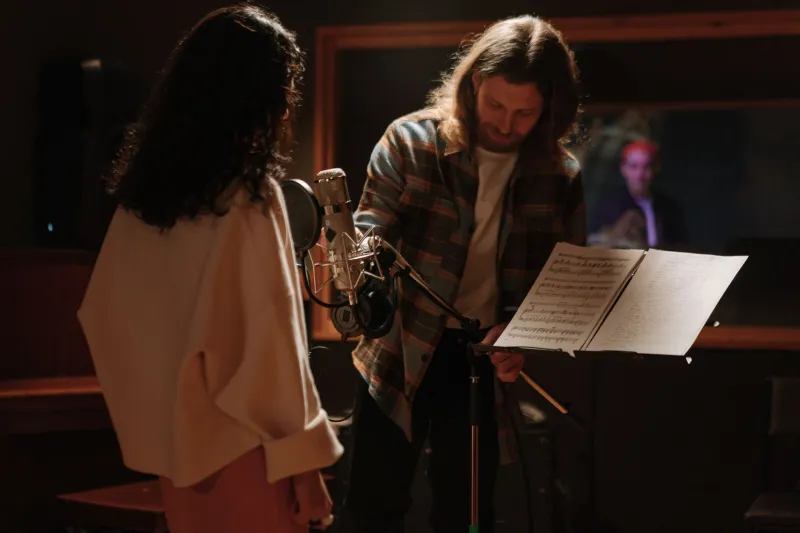
Singer-songwriter Mara Delgado, who built her audience playing small listening rooms in Austin before landing a support slot on a 40-city arena tour, described the transition this way: "I thought I'd feel like a fraud up there in front of all those people who came to see someone else. Instead I felt like I was meeting a version of myself I'd been keeping in storage. She was louder. She moved more. She wasn't wrong — she was just waiting for a room big enough to exist in."
That's not performance as deception. That's performance as excavation.
What the Room Actually Does
Here's the psychology of it, stripped down: audiences don't just receive energy, they generate it. Every crowd carries its own frequency — the tightly wound focus of a seated jazz room, the loose, permission-giving chaos of a festival field, the intimate pressure of fifty people in a bar who can see your face clearly enough to notice when something lands wrong.
Each of those environments pulls different things out of a performer. The jazz room might draw out your restraint, your precision, the part of you that trusts silence. The festival field might unlock your showmanship, the instinct to go big and broad and physical. Neither version is more "real." They're both real. They just needed different conditions to surface.
Comedian and writer Theo Park, who spent years bouncing between college campuses, corporate gigs, and late-night alt-comedy shows in New York, puts it bluntly: "Corporate rooms made me realize I actually have range. I hated doing them at first — felt like I was dumbing myself down. But then I started noticing I was solving problems I didn't know I had. How do you make a joke land when the audience didn't choose to be there? That's a skill. And figuring it out taught me things about timing I never would've learned playing to rooms that were already on my side."
The Danger of Only Preaching to the Choir
There's a comfortable trap that a lot of creatives fall into — especially in the age of algorithmic audiences, where every platform is quietly sorting you toward the people who already like what you do. It feels like loyalty. It feels like staying true to your lane.
But there's a cost. When you only ever perform for people who already get you, you stop being challenged to explain yourself. You stop having to reach. And somewhere in that comfort, certain parts of you quietly go dormant.
The artists who seem to keep evolving — the ones who don't calcify into self-parody — are almost always the ones who keep deliberately walking into rooms that don't know their name. Not to chase new fans, necessarily, but because unfamiliar audiences ask unfamiliar questions. And those questions have a way of locating things inside you that even your most devoted crowd would never think to look for.
R&B artist and producer Janelle Simms, who has played everything from church services to queer art spaces to corporate brand activations, describes it as "controlled exposure therapy for your ego. You find out really fast what you actually believe about your own work when the room isn't automatically nodding along. It strips away the noise and leaves just you and whatever you actually have to offer."
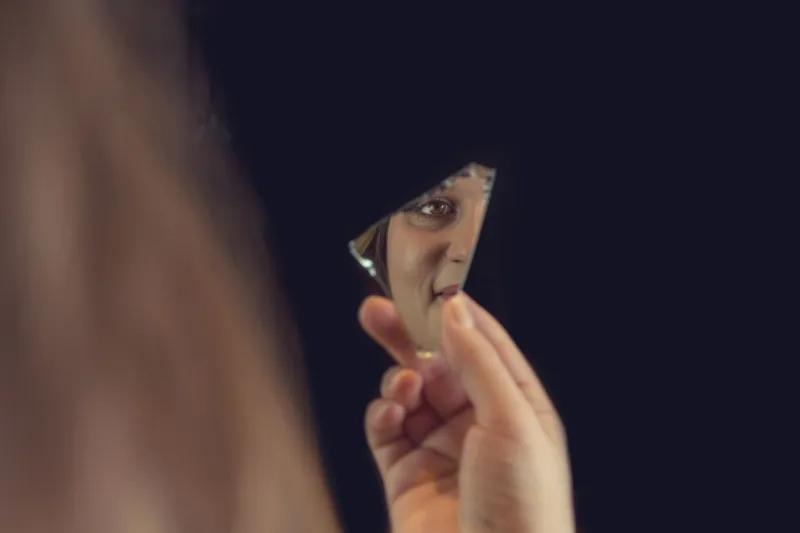
The Mirror Doesn't Always Flatter You
To be fair, this process isn't always a revelation. Sometimes the room reflects back something uncomfortable — a habit you've leaned on too hard, a persona that reads as stiff when it doesn't have a home crowd propping it up, a joke that only works because your regulars have agreed to find it funny.
That's information too. Painful, useful information.
One of the more humbling aspects of playing unfamiliar rooms is the moment when you realize that something you thought was a core part of your artistic identity is actually just a local dialect — something your usual audience understands implicitly that the rest of the world doesn't. That's not necessarily a problem, but it's worth knowing. It tells you what's universal in your work and what's specific. Both matter. But you can't tell the difference until someone in the room looks confused.
Adaptability Isn't the Enemy of Depth
The fear, for a lot of artists, is that shifting for different audiences means losing something essential — that if you can be different things to different rooms, maybe you're not really anything at all.
But that logic only holds if you believe identity is a single, static note rather than a full chord. The chameleon isn't shapeless. It's just honest enough to let its context be part of the picture.
What performing for wildly different audiences tends to produce, over time, is not a fragmented self but a more complete one — a map of your own range, drawn by the places you've been willing to go. The late-night dive bar version of you and the festival-main-stage version of you and the nervous-small-room version of you are not competing drafts. They're all chapters of the same story.
And the story only makes sense if you've been willing to walk into rooms where no one knew how it was supposed to end.
That's the deal. You bring yourself. The room brings the question. And somewhere in the exchange, you find out something you couldn't have learned any other way.