When Blending In Breaks You: The Hidden Cost of Chasing What the Crowd Wants
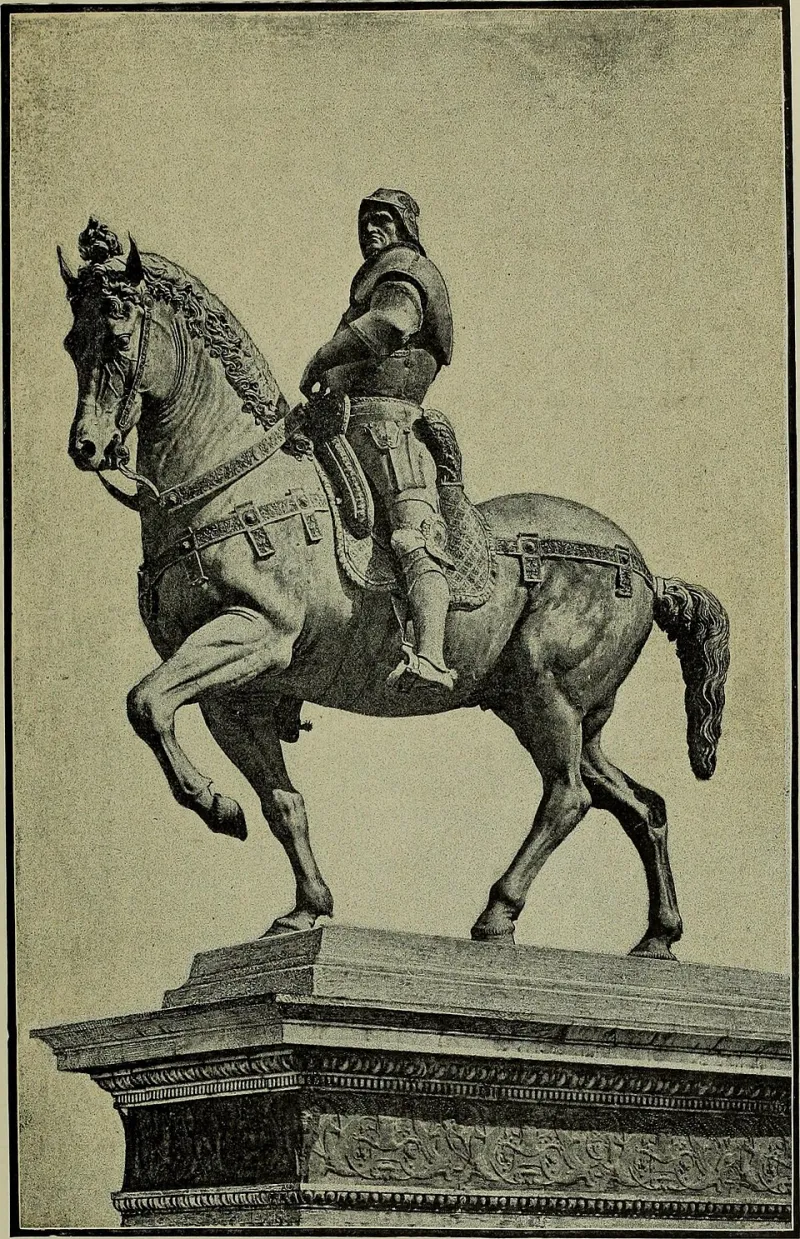
Photo: Müntz, Eugène, 1845-1902, No restrictions, via Wikimedia Commons
The Slow Erosion Nobody Talks About
There's a version of selling out that everyone recognizes. The indie band signs with a major label, drops the distortion pedals, and suddenly sounds like a Spotify playlist curated by a focus group. We see it, we name it, we move on.
But there's another version — quieter, slower, and honestly a lot harder to catch. It happens one small decision at a time. A songwriter softens a lyric because a producer flinched. A visual artist swaps their signature palette for whatever's trending on gallery Instagram. A novelist cuts the weird, difficult middle section because their editor said readers won't follow it. None of these moments feel like betrayal in the moment. They feel like professionalism. Like being a team player. Like growing up.
And then one day you look at the body of work and don't recognize the person who made it.
This is the chameleon's curse — the trap that lives on the other side of adaptability. The ability to shift, to read a room, to respond to feedback: all of that is genuinely valuable. But the same skill that lets an artist evolve can, if left unchecked, turn into a slow-motion disappearing act.
Where Adaptation Ends and Surrender Begins
Let's be clear about something upfront: changing your style is not the problem. Artists are supposed to grow. David Bowie didn't stay Ziggy Stardust. Kendrick Lamar doesn't make the same record twice. Even Georgia O'Keeffe, as closely associated with her iconic imagery as any American artist has ever been, spent decades pushing her own visual language into new territory.
The difference between that kind of evolution and creative surrender isn't really about the what — it's about the why.
When an artist changes because something internal has shifted — a new obsession, a new technique, a new phase of life demanding new expression — the work tends to carry that energy. Even when it's unfamiliar, it feels inhabited. Like someone actually lives there.
When an artist changes because an algorithm rewarded a different sound, because a label wants more streams, because the comment section got loud — the work often feels like a costume. Technically it might be fine. Sometimes it's even commercially successful. But there's a hollowness to it that listeners and viewers pick up on, even if they can't name it.
One musician — a Brooklyn-based singer-songwriter who asked to remain unnamed because she's still signed to the label in question — described it this way: "I watched myself become a really good version of someone else. My producer kept saying 'this is more you' every time we moved further away from what I actually sounded like. And I let it happen because I was scared. By the time the record came out, I didn't want to perform it."
That phrase — a really good version of someone else — might be the most honest description of creative surrender anyone's ever offered.
The Feedback Loop Problem
Social media has made this harder in ways we're still reckoning with. Platforms don't just tell you what people liked; they reward it in real time, with numbers that are very easy to internalize as grades. Post something that pops and the dopamine hits. Post something experimental and watch the engagement tank.
For artists who built their audiences online, this creates a feedback loop that's almost impossible to step outside of. Every piece of content becomes a test. Every test has results. And the natural human instinct is to repeat what scored well.
The problem is that artistic identity doesn't survive optimization. You can A/B test a thumbnail, but you can't A/B test your creative soul without eventually misplacing it.
Filmmaker and video essayist Dara Okonkwo, who built a following on YouTube before transitioning to short-form documentary work, talked about hitting this exact wall: "I knew exactly what would get clicks. I'd figured out the formula. And I realized the formula was making me miserable — and making the work worse. I had to actively break my own patterns just to remember what I actually cared about."
Breaking patterns on purpose. That's the move. Not ignoring feedback entirely, but creating enough distance from it to ask: whose voice is this, really?
A Framework for Knowing When to Hold
So how do you tell the difference in real time — before you've spent two years making someone else's record or painting someone else's paintings?
A few questions worth sitting with:
Does the change excite you or just relieve you? Genuine evolution tends to come with a specific kind of nervous energy — the thrill of trying something unfamiliar. Creative compromise tends to come with relief. Finally, people will stop criticizing this. Those are very different feelings.
Are you adding something or removing something? Growth usually involves expansion — new influences folding into an existing voice. Surrender often involves subtraction — the weird parts getting smoothed away, the difficult edges getting filed down.
Can you defend the change without referencing the audience? Try explaining your creative decision without once mentioning what listeners, viewers, or followers might prefer. If you can't, that's worth examining.
Would the version of you who started this career recognize what you're making? Not as a reason to never change — but as a gut check. There's a difference between having grown past something and having abandoned it under pressure.
The Artists Who Held the Line
It's worth naming some people who got this right, because the story doesn't have to end in surrender.
Fiona Apple is probably the clearest American example of an artist who simply refused to bend toward commercial expectation — and whose catalog is richer and more enduring for it. Fetch the Bolt Cutters, released in 2020, was made in her home over years, on her own terms, and became one of the most critically celebrated albums of the decade. She didn't chase the sound of the moment. She chased whatever was alive inside the work.
Director Barry Jenkins, coming off the cultural and commercial success of Moonlight, could have made almost anything the industry wanted him to make. He chose If Beale Street Could Talk — a slow, emotionally demanding adaptation of James Baldwin that was never going to be an easy sell. He held his aesthetic line. The work reflects that.
Neither of these artists is impervious to outside influence. But there's a core in their work that the outside world doesn't get to renegotiate.
You Can Adapt Without Disappearing
The chameleon, as a symbol, gets misread. People assume it's about becoming whatever the environment demands — total camouflage, no fixed self. But the chameleon doesn't actually change its fundamental biology. It shifts the surface while the essential creature stays intact.
That's the model worth borrowing. Change the surface when it serves the work. Let new influences in. Respond to the world you're living in. But know where the core is — and know when someone's asking you to hollow it out rather than expand it.
The artists who last aren't the ones who never changed. They're the ones who always knew which parts were non-negotiable.