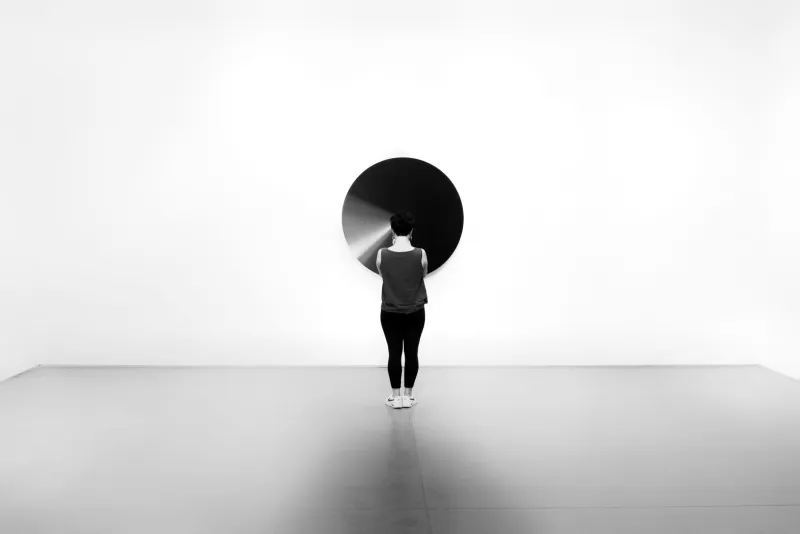
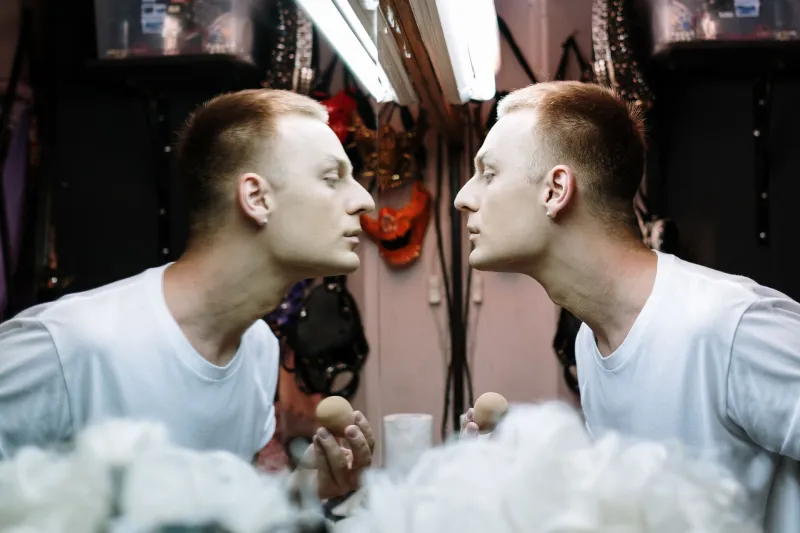
Fewer Colors, Louder Voice: The Surprising Freedom Hidden Inside Artistic Limits
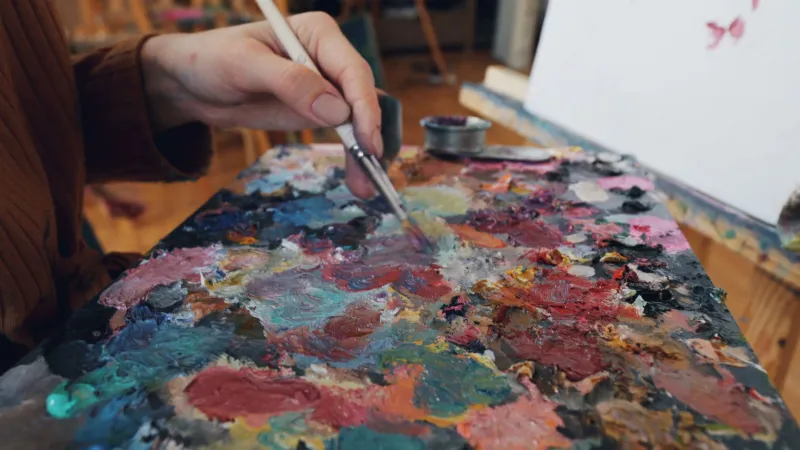
There's a version of creative freedom that looks like a fully stocked studio — every color of paint, every instrument tuned, every door open. And then there's the other kind. The kind that shows up when the supply run falls through, when the deadline shrinks, when someone tells you that you can only use three chords or one setting or a single sheet of paper. That second kind? It has a track record that's hard to argue with.
Constraint isn't the enemy of expression. For a lot of artists, it turns out to be the whole engine.
The Blank Canvas Problem Nobody Talks About
Here's the thing about unlimited options: they're paralyzing. Walk into any art supply store in the country and you'll find dozens of shades of blue alone. Cerulean, cobalt, prussian, powder, electric — and that's before you start mixing. The abundance feels like possibility, but for a lot of working artists, it quietly becomes a trap. The more choices available, the harder it is to commit to any single one.
Psychologists have a name for this — decision fatigue — but artists have been living it long before anyone ran a study on it. When everything is available, nothing feels necessary. And necessity, it turns out, is where the interesting stuff lives.
Self-imposed limits cut through the noise. They force a kind of clarity that open-ended freedom rarely produces on its own.
When the Palette Shrinks, the Work Expands
Consider what happened when visual artists started deliberately narrowing their tools. Giorgio Morandi, the Italian painter who spent decades in the 20th century painting essentially the same small cluster of bottles and bowls, is one of the clearest examples of this at work. He didn't keep returning to those objects because he lacked imagination. He returned because the constraint was the imagination. Within that narrow subject, he found infinite variation in light, mood, and weight. Critics who first dismissed his work as repetitive eventually recognized it as some of the most emotionally precise painting of the century.
Closer to home, American abstract expressionist Ad Reinhardt spent the last years of his career painting what he called his "black paintings" — canvases that appeared, at first glance, to be entirely black. But spend time with them and subtle geometric forms emerge from the darkness, almost like your eyes are adjusting to a room you didn't know you were entering. Reinhardt didn't run out of ideas. He ran toward the most severe limit he could find and discovered that it held more than he expected.
Three Chords and the Truth
Music has its own version of this story, and it's one that shows up across genres in ways that feel almost too consistent to be coincidence.
The blues tradition — foundational to virtually every form of American popular music that followed it — built an entire emotional universe inside a rigid 12-bar structure. That framework didn't flatten the music. It gave performers a shared language tight enough that they could push against it, stretch it, bend a note just far enough that the tension became the whole point. The constraint wasn't a cage. It was a trampoline.
Punk rock pulled the same move in a completely different direction. When the genre exploded in the mid-70s, it was partly a reaction against the elaborate, expensive, technically demanding music that had come to dominate rock. The response wasn't to add more — it was to strip everything down to its raw minimum. Three chords. Fast. Loud. The simplicity wasn't a limitation born of inability. For a lot of those bands, it was a deliberate philosophical stance. And it cracked open an entire cultural moment.
More recently, artists like Jack White have talked openly about how working with broken or deliberately limited equipment pushed them toward sounds they never would have found otherwise. When your guitar only has one string, you stop playing the song you planned and start playing the one the instrument will allow. Sometimes that second song is better.
Writers Who Locked the Door Behind Them
Literature has a long, slightly obsessive relationship with formal constraint. The French literary group Oulipo — whose members included Georges Perec and Italo Calvino — turned restriction into an art form in itself. Perec wrote an entire novel, La Disparition, without using the letter "e." Not as a stunt. As a structural decision that forced the language into shapes it would never have taken otherwise, shapes that turned out to carry their own strange emotional weight.
In the American tradition, the haiku form — borrowed and adapted from Japanese poetry — has produced some of the most compressed, powerful writing in the language. Seventeen syllables. That's the constraint. And within it, writers have managed to fit grief, joy, irony, and entire landscapes. The limit doesn't shrink what can be said. It pressurizes it.
Even genre fiction operates on this principle. The rules of a mystery novel — the crime, the investigation, the reveal — aren't a formula that produces sameness. They're a container that lets writers focus their energy on character, language, and surprise rather than spending it on structural decisions that have already been made.
Performance Under Pressure
Theater and performance art have their own relationship with constraint, and it's one that often produces the most visible results. Improv comedy, which looks like pure freedom from the outside, is actually built on a strict architecture of rules. "Yes, and" — the foundational principle of improv — is a constraint. It forces performers to accept and build rather than reject and redirect. That single rule creates the conditions for spontaneity that pure freedom rarely generates on its own.
In contemporary dance, choreographers like Pina Bausch built entire bodies of work around deliberate restrictions — limited movement vocabularies, repeated gestures, confined staging. The repetition didn't read as poverty of imagination to audiences. It read as depth, as ritual, as something worth paying attention to.
Finding Your Limit
None of this means that constraint is automatically useful, or that limiting yourself will guarantee a breakthrough. The artists who used restriction most powerfully weren't just following rules. They were choosing their limits carefully — picking the ones that forced them toward their actual subject, their actual voice, the thing they actually had to say.
The chameleon doesn't change color at random. It responds to its environment with precision, using exactly what the moment requires and nothing more. That's not limitation. That's control.
So maybe the question worth asking isn't what you'd make if you had everything. It's what you'd make if you only had one thing — and whether that version might be the one that actually sounds like you.