Flip the Script: Why Changing Your Mind Is the Bravest Thing a Creative Can Do
There's a particular kind of internet moment we've all witnessed. Someone digs up an old tweet, a decade-old interview, a college essay — and suddenly a person's entire current identity is held hostage by whoever they used to be. The implicit message is clear: you said this then, so you must believe it now. Consistency, apparently, is the highest virtue. Changing your mind? That's called hypocrisy.
Except it isn't. And artists, more than almost anyone else, know this.
The Pressure to Stay in Your Lane
There's a strange kind of social contract we impose on public figures — especially creative ones. We want our musicians to keep making the same album. We want our favorite directors to stay loyal to the aesthetic that made us fall in love with their work. We want our poets, our painters, our podcasters to hold down a consistent worldview so we can feel anchored to something stable in an unstable world.
And look, that impulse is understandable. Familiarity is comforting. When Kendrick Lamar drops something sonically unexpected, there's always a corner of the fanbase that mourns the version of him they thought they owned. When Taylor Swift shifted from country to synth-pop, the discourse wasn't just about music — it was about betrayal. As if an artist updating their sound was somehow a personal offense.
But here's the thing: that pressure to stay consistent doesn't protect the art. It fossilizes it.
What We Actually Mean by Hypocrisy
Let's be honest about what we're really calling out when we say someone is being hypocritical. Sometimes, yeah — it's a legitimate critique. A politician who campaigns on one value and privately lives by the opposite deserves scrutiny. That's not changing your mind; that's lying.
But changing your aesthetic? Revising a position you held five years ago because you've read more, lived more, felt more? That's not hypocrisy. That's growth. And conflating the two has done a real number on our collective tolerance for intellectual evolution.
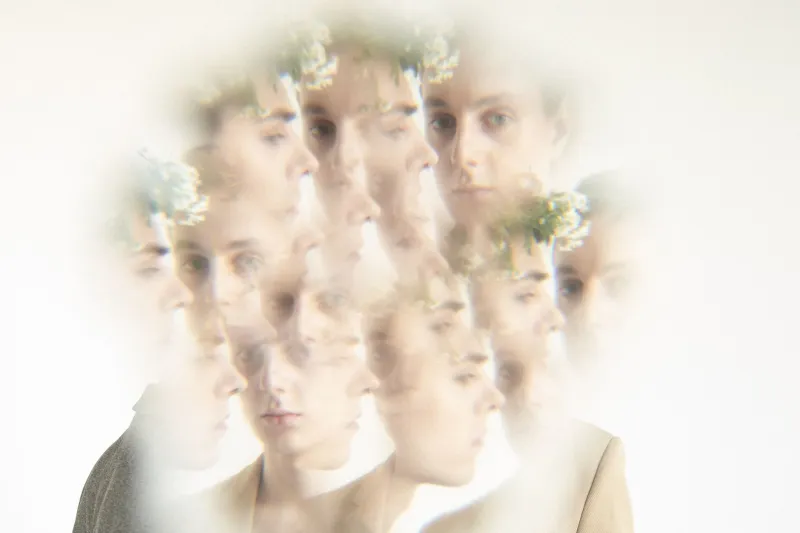
The chameleon doesn't change color because it's lying about who it is. It changes because its environment changed, because it's responding to something real. That's not deception — that's intelligence.
Artists Who Dared to Contradict Themselves
Think about David Bowie, who spent a career deliberately dismantling whatever persona had just won him the most fans. Ziggy Stardust gave way to the Thin White Duke. The Thin White Duke gave way to something quieter and stranger. Every reinvention was met with some version of but what about the old stuff? And every time, Bowie essentially said: I'm not a museum exhibit.
Or consider how Kanye West — controversies and all — fundamentally rewired what hip-hop production could sound like, not once but repeatedly. The College Dropout and 808s & Heartbreak don't even sound like they came from the same artistic universe. Whether you love him or can't stand him, the creative willingness to contradict his own previous aesthetic was genuinely radical.
Even in literature, Toni Morrison spoke in interviews about how her understanding of her own earlier work shifted over time. She didn't disown it — but she allowed herself the dignity of seeing it differently, of layering new meaning over old intentions.
These aren't cautionary tales. They're blueprints.
The Maturity Hidden Inside the U-Turn
Here's what actually takes courage: saying out loud, in public, I used to think this, and I don't anymore. Not because you got caught, not because the wind shifted, but because something genuinely changed in you.
That kind of intellectual honesty is rare. Most people would rather quietly drop a position than actively acknowledge the shift, because acknowledgment invites scrutiny. It hands ammunition to anyone who wants to paint you as inconsistent or untrustworthy.
But for a creative person especially, the alternative is worse. Locking yourself into your old opinions to maintain the appearance of consistency means you stop growing. You start performing a version of yourself that no longer exists. And audiences — even the ones who say they want consistency — can usually feel when an artist is going through the motions versus when they're genuinely present in their work.
The most compelling art tends to come from people who are still figuring things out, not people who've calcified into a brand.
Changing Your Mind vs. Chasing Clout
Okay, there's a fair counterpoint worth naming: not every opinion shift is genuine. Some public figures absolutely do perform evolution for strategic reasons — pivoting their aesthetic when the market moves, suddenly discovering progressive values when it becomes commercially advantageous. That's worth calling out, and audiences are usually pretty good at sniffing it out.
The difference lies in what drives the change. Is it coming from the inside — from new experience, new knowledge, genuine discomfort with a previous position? Or is it coming from outside — from metrics, from backlash management, from PR strategy?
Authentic evolution tends to feel a little messy, a little uncomfortable. It doesn't come pre-packaged with a press release. It shows up in the work before it shows up in the interviews. That's the tell.
Give Yourself — and Others — Some Room
For anyone creating something right now, whether it's music or film or writing or visual art, there's a quiet permission slip buried in all of this: you don't have to be the same person you were when you made your last thing.
Your old opinions don't have to follow you around like a shadow. The thing you believed deeply at 24 doesn't need to be the thing you defend at 34. The aesthetic that felt urgent five years ago doesn't have to be the one you're still chasing today.
And when you encounter someone else — an artist, a public figure, a friend — who has visibly shifted their thinking, consider the possibility that you're not watching someone crumble under pressure. You might just be watching someone grow in real time.
That's not weakness. That's the whole, complicated, beautiful point.
The chameleon doesn't apologize for the colors it wore yesterday. It's already moved on to something new.