Pick a Fight With Yourself: Why the Best Creatives Argue Against Their Own Legacy
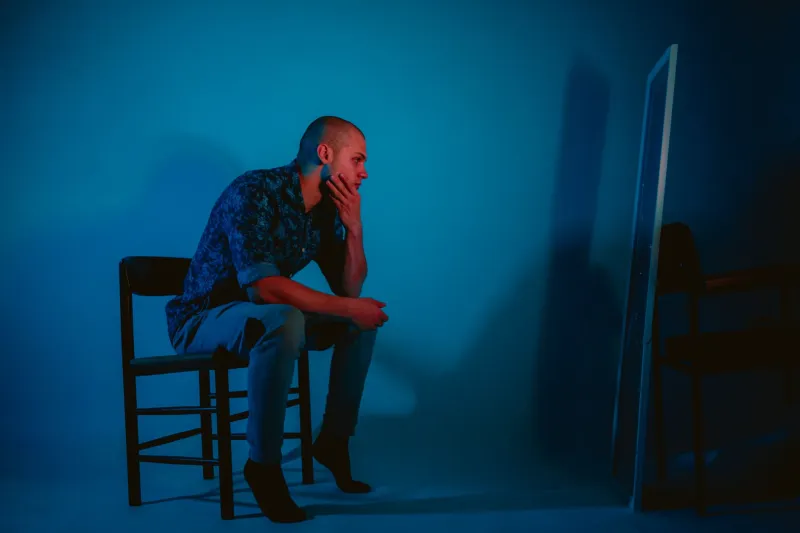
There's a version of creative success that looks a lot like a trap. You find your thing — your sound, your aesthetic, your thesis — and the audience responds. People quote you. They tattoo your lyrics. They write term papers about your visual language. And then, quietly, you start to feel like a museum exhibit of yourself.
The comfortable move is to keep producing variations on the thing that worked. The dangerous move — the one that actually keeps you alive as a creator — is to walk back into the room and start an argument with the person you used to be.
The Myth of Consistency
American culture has a complicated relationship with people who change their minds. We call politicians flip-floppers. We call artists sellouts. We treat a shift in perspective as evidence of weakness or, worse, dishonesty. But that framing fundamentally misunderstands how creative intelligence actually works.
Consistency is a performance. It's the thing you do when you care more about how your evolution looks to other people than what it actually costs you to stay frozen. Real creative growth isn't linear — it doubles back, contradicts, and occasionally blows up the whole roadmap.
Think about Kendrick Lamar releasing Mr. Morale & The Big Steppers after years of being held up as the moral compass of hip-hop. That album was, in part, a direct rebuttal to the pedestal his audience had built for him. He didn't just complicate the narrative — he actively dismantled the image he'd helped construct. Fans were uncomfortable. Critics were divided. And that discomfort was precisely the point.
The Discomfort Is the Data
When you contradict your past self publicly, something interesting happens in the audience. Some people leave. But the ones who stay? They lean in harder than they ever did before.
There's a reason for that. When a creator you've followed for years stands up and says I was wrong about this or that thing I made doesn't represent where I actually am — it signals something rare: that they're still genuinely thinking. Still processing. Still arriving somewhere new instead of just repackaging the last destination.
That kind of vulnerability is magnetic. It's also terrifying to execute, because the people who loved your old position are watching.
Taylor Swift's pivot from country sweetheart to pop architect to indie folk recluse to stadium maximalist wasn't just a genre shift — each era contained an implicit argument against the previous one. The Folklore moment, in particular, felt like a direct conversation with the maximalist spectacle of Reputation and Lover. Quieter. More interior. Almost confessional about the cost of the previous version. She didn't disown those records, but she moved away from them with intention, and the contrast made both eras more interesting.
What It Actually Takes
Contradicting your own legacy isn't about being contrarian for the sake of it. That's just a different kind of performance. The real thing requires a specific kind of honesty — the kind where you sit with your old work and ask whether you actually still believe it, or whether you've just been protecting it.
For a lot of creatives, the answer arrives slowly. You notice you're bored making the thing people expect. You notice the interviews are getting repetitive. You notice you're defending positions you stopped holding privately, months ago, because abandoning them publicly feels like too much to manage.
That gap — between what you're saying in public and what you actually think — is where creative stagnation lives.
The chameleon doesn't change color because it's confused. It changes because its environment shifted, and it had the biological intelligence to respond. The artists who do this well aren't abandoning their identity — they're expressing the deepest version of it, which is the capacity to keep becoming.
The Audience Isn't as Fragile as You Think
One of the biggest fears behind staying frozen is the assumption that your audience needs you to be consistent to keep trusting you. But that underestimates people.
Audiences are more sophisticated than the industry gives them credit for. They can tell the difference between an artist who changed because they grew and one who changed because a label told them to. The former earns respect. The latter earns side-eyes.
When Rick Rubin started talking publicly about his evolving philosophy around creativity — ideas that sometimes contradicted the stripped-down, instinct-driven approach he'd been associated with for decades — nobody ran for the door. If anything, it deepened the conversation around his work. He wasn't protecting a brand. He was thinking out loud. And people responded to that.
The same principle applies whether you're a musician, a visual artist, a filmmaker, or a writer. Your audience followed you because of something they sensed in the work — a quality of attention, a particular kind of honesty, an energy. That thing doesn't disappear when your ideas shift. It's usually what makes the shift compelling in the first place.
The Argument You Owe Yourself
Here's the part nobody talks about enough: contradicting your past self isn't just good for your career. It's good for your actual thinking.
There's a cognitive concept sometimes called the "commitment and consistency bias" — the tendency to keep defending a position simply because you've already committed to it publicly. It's one of the most creativity-killing forces in existence. It turns artists into brand managers and thinkers into lobbyists for their own old ideas.
The act of genuinely arguing against your previous work — not for an audience, but for yourself — forces you to locate what you actually believe versus what you've just been repeating. It's uncomfortable in the way that real stretching is uncomfortable. Necessary. Productive. A little bit painful.
Some of the most interesting creative figures in American culture have made this their practice. They write the essay. They make the album. They release the film. And then they move on — not by pretending the previous thing didn't exist, but by being willing to look at it critically and ask what it got wrong.
Shift Without Apology
None of this means you owe anyone an explanation for changing. You don't have to publish a manifesto every time your perspective evolves. The work itself can carry the argument.
But if you're sitting on a creative direction that feels true and new and genuinely different from what you've done before — and the only thing stopping you is the worry that it contradicts your previous output — that's worth examining.
The most interesting creative lives aren't straight lines. They're full of reversals, reconsiderations, and moments where the artist looked at their own body of work and decided to push back against it. That friction isn't a flaw in the story. It's usually where the story gets good.
Your past work doesn't need your protection. It already exists. It's already out there. What it needs — what you need — is for you to keep moving past it.